
Wiring Installation and Repair

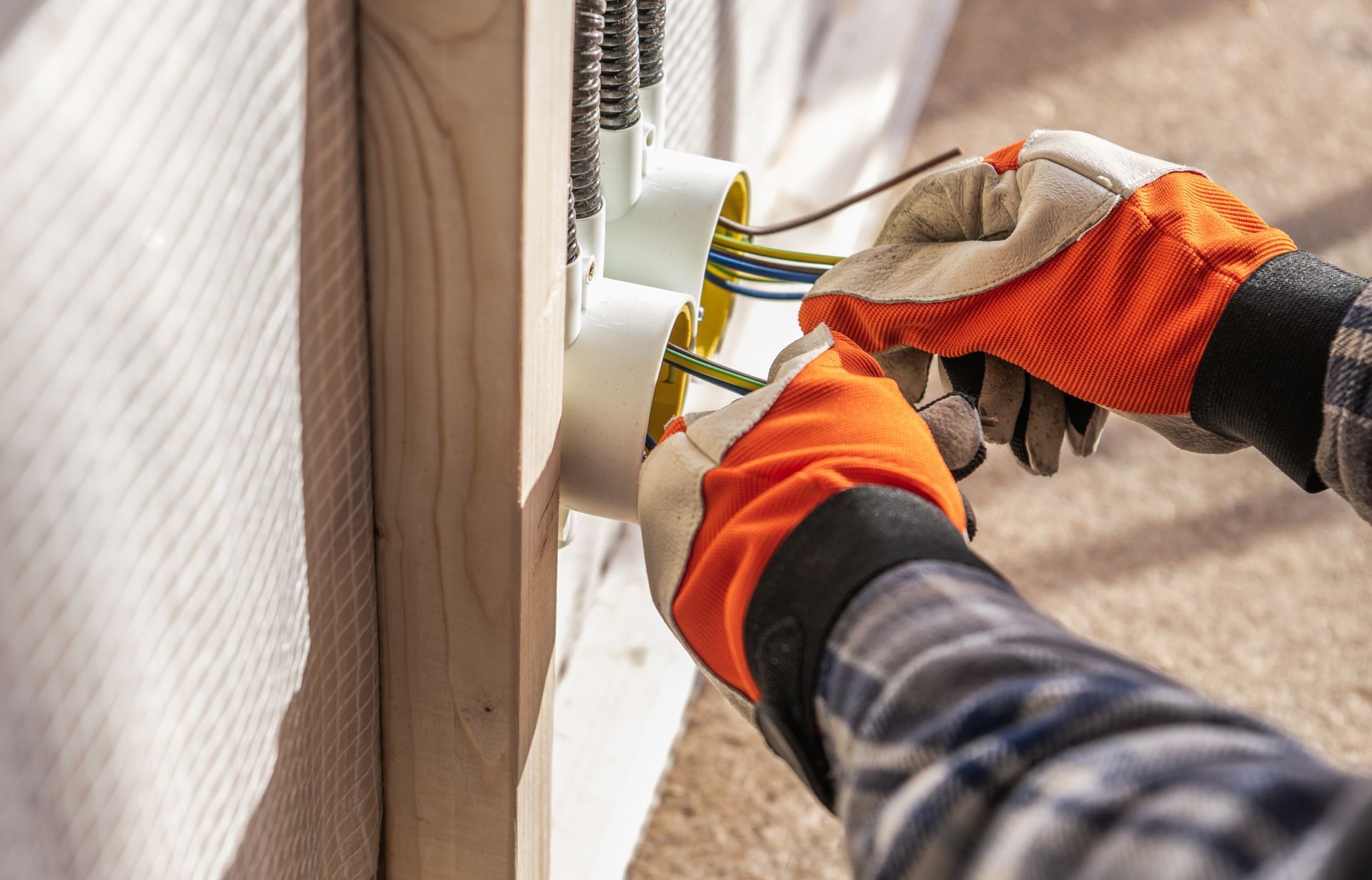
Wiring Installation and Repair in Indianapolis
A network is only as dependable as the cable carrying it. MaryComm Wiring handles wiring installation and repair in Indianapolis. That means running new cable, fixing lines that have started to fail, and finishing every connection with a proper termination and faceplate. Adding a single jack and wiring a full floor take the same basic approach: the cable goes where it needs to go, and every end is done right.
Running New Cable
New cable starts with a route. It has to get from your equipment, often a switch or patch panel, to each spot that needs a connection. Along the way it must not be pinched, bent too tightly, or laid alongside power lines where interference can creep in. Walls, ceilings, and floors each shape that path differently. A drop ceiling opens easily. Finished drywall takes more planning.
Each run is measured, pulled, and secured along its length so it stays put once the ceiling tiles or wall plates go back on. Labeling both ends matters just as much. When something changes a year from now, a labeled cable can be found in minutes.
Security cameras, speakers, and coaxial lines each need a clean cable path to work the way they should. Camera, speaker, and coax wiring runs and connects the cable to each device, whether that is one camera over a door or a set of speakers across several rooms.
04
Cameras, Speakers, and Coax
Terminations and Faceplates
The end of a cable is where the quality of the work shows. Terminating means attaching the bare conductors to a jack or connector in a set order, so the signal passes cleanly from one device to the next. A rushed termination can look fine and still cause problems. Too much untwisted wire, or pairs in the wrong order, can cut speed or make a connection drop in and out.
Once a cable is terminated, a faceplate finishes the location. It holds the jack firmly in the wall, keeps the connection from being tugged loose, and gives the room a clean look. We install faceplates on new runs and replace cracked or loose ones on existing jacks.
Repairing Lines That Have Stopped Working
Failing cable rarely makes the cause obvious. Instead, you notice the symptoms:
- a desk where the connection drops every afternoon
- a jack that works only when the cord is held at an angle
- a room where the speed never matches the rest of the building
Repair begins by finding the actual fault. The line is tested end to end and the problem is traced to its source, whether that is a worn jack, a bad termination, or damage somewhere along the run. A bad end can usually be re-terminated on the spot. A cable that has been crushed, cut, or kinked inside a wall is a different matter, and replacing that run is often more reliable than trying to patch it.
When the Job Is Bigger Than New Cable
Wiring projects often sit next to other work. When a space is being cleared out before a renovation,
structured cabling demo and tear-outs remove the old cable so new runs go into a clean ceiling instead of a tangle. Once the cable is in place,
network installation connects the switches, routers, and other equipment that put it to use. The
MaryComm Wiring home page lists every service in one place.

Where We Work
Wiring calls come from across Indianapolis and from nearby towns including Speedway, Southport, Cumberland, and Carmel. Beyond the metro area, MaryComm Wiring
covers the entire state.
Frequently Asked Questions
What is the difference between repairing a cable and replacing it?
A fault at the end of a cable, such as a worn jack or a poor termination, can usually be fixed by re-terminating that end. Damage along the run itself, like a crush point or a cut inside the wall, generally means replacing the cable from end to end. Splicing data cable in the middle of a run weakens the signal.
What does terminating a cable involve?
The outer jacket is stripped back, the twisted pairs are arranged in a standard order, and each conductor is seated into a jack or connector. For network cable this is typically an RJ45 connection wired to the T568A or T568B standard. Both ends must use the same standard for the line to work.
How long can a network cable run be?
Standard Ethernet cabling is rated for runs of up to 100 meters, or about 328 feet, between devices. Longer distances need a switch partway along or a different type of cable, so the route is measured before anything gets pulled.
Can a new jack be added in a room that has none?
Yes. A new cable is routed from the network equipment to the new location through the ceiling, wall, or floor. It is then terminated at a jack and finished with a faceplate. Access makes the biggest difference to the job: a drop ceiling is far simpler to work through than closed drywall.
What should I have ready before calling about a wiring job?
Three details help the most:
- the number of connections you need
- roughly how far each location sits from your network equipment
- what kind of ceiling or wall the cable will pass through
If you can send pictures of the current jacks or the equipment closet, include those as well.